Steiner and Company produces the Profit Maximizer report on behalf of National Pork Board based on information we believe is accurate and reliable. However neither NPB nor Steiner and Company warrants or guarantees the accuracy of or accepts any liability for the data, opinions or recommendations expressed.
Highlights
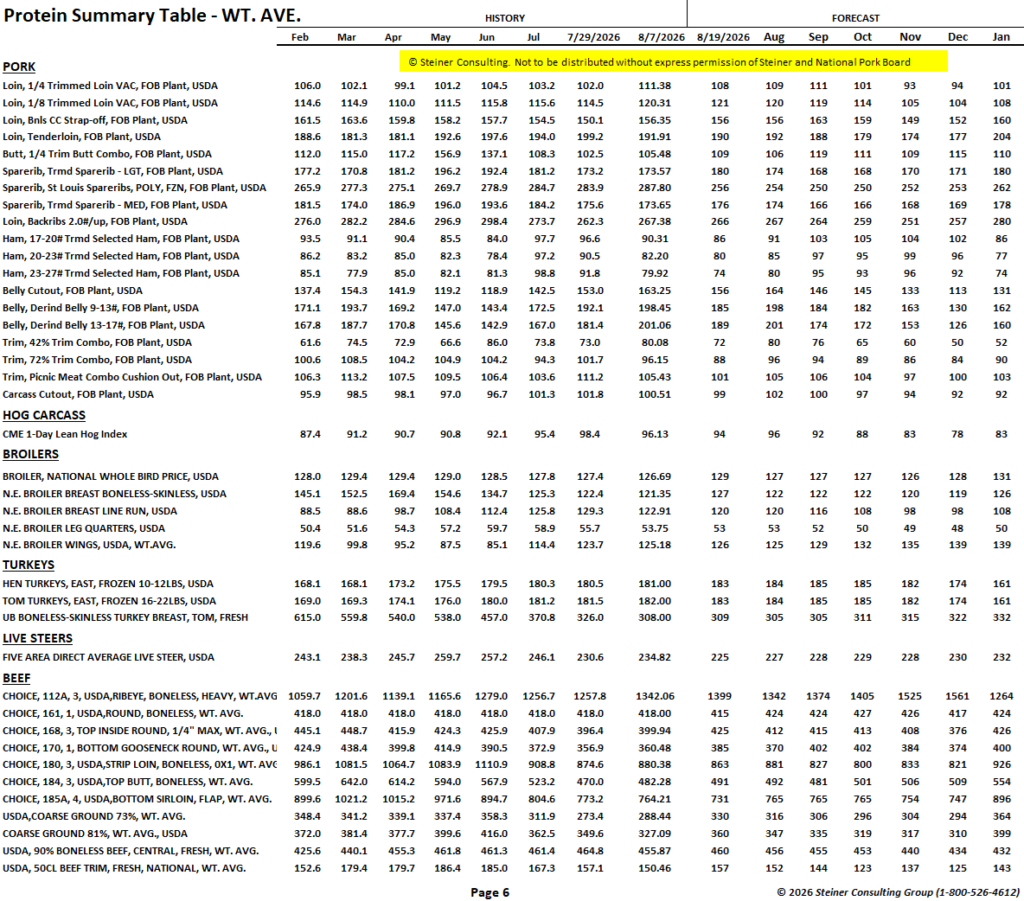
- Pork demand, be this from export or domestic channels, has far underperformed expectations and it is clearly well below year ago. Slaughter in the last four weeks is down 2.5% vs year ago and yet the pork cutout last week was down 14% y/y.
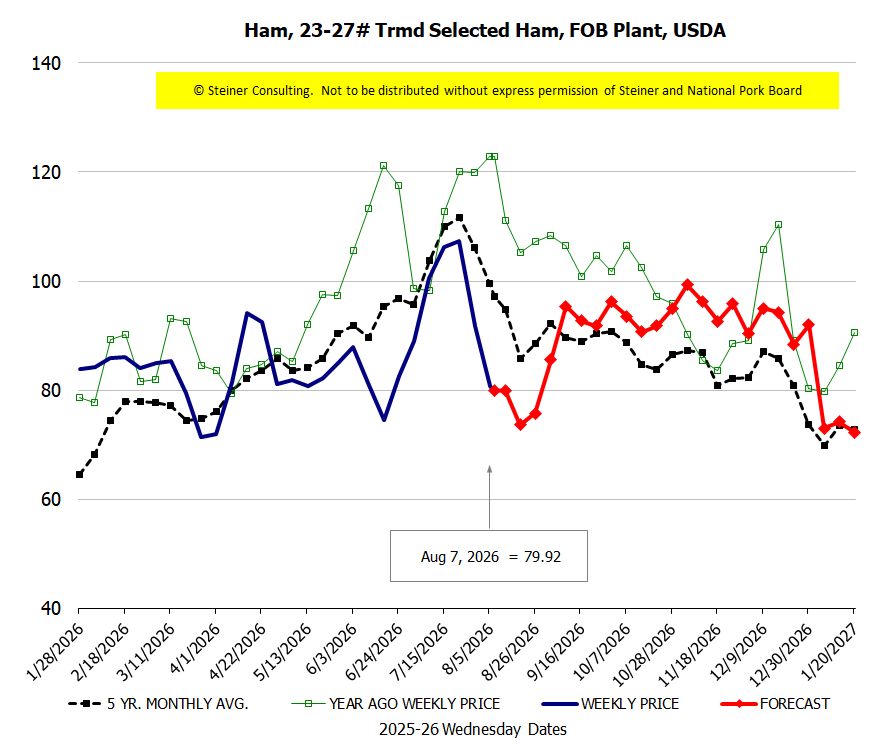
- The value of all the main primals are below year ago but last week more than half of the y/y decline in value of the cutout was due to lower ham prices. Mexico takes about a third of us ham production and by the end of July export sales on the books for Mexico (product sold but not yet shipped) were 32% less than last year.
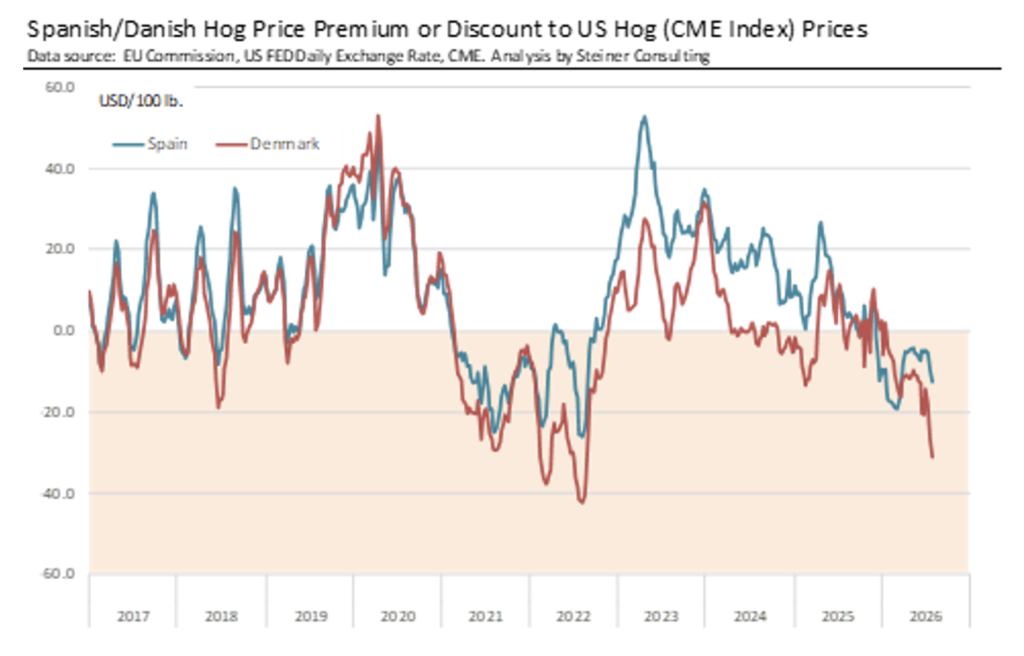
- Lower pork prices in other markets, be this EU or Brazil have negatively impacted demand from other Asian markets. Danish hog prices are some 31% below US hog values. The impact is most visible in the value of picnics, with the picnic primal down 26% vs. year ago.
Full Report
Will the Pork Market Slump Continue in the Fall?
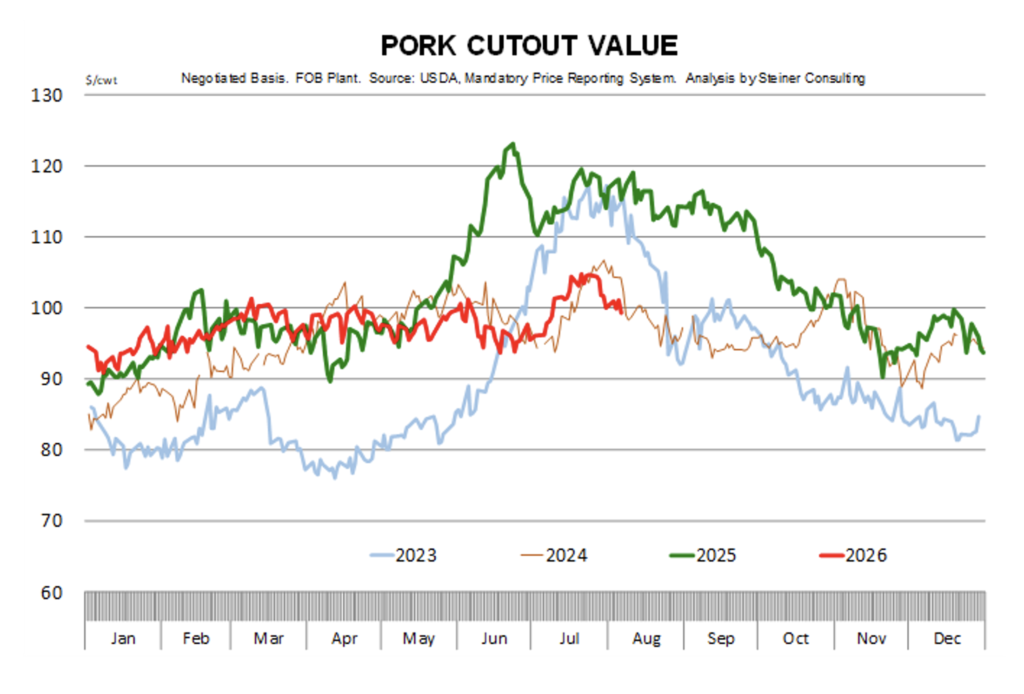
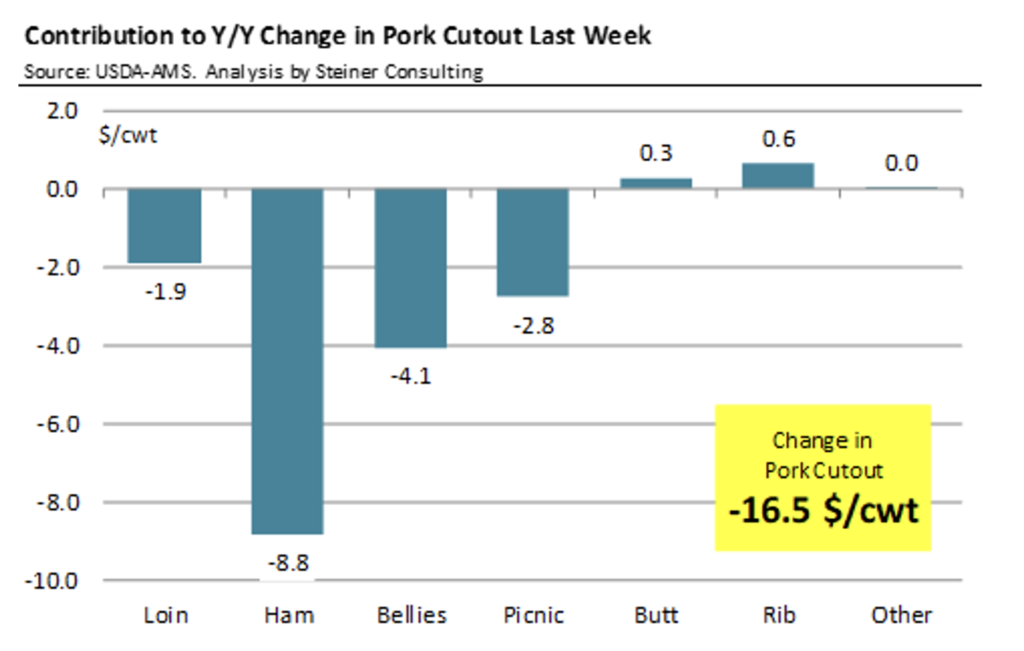
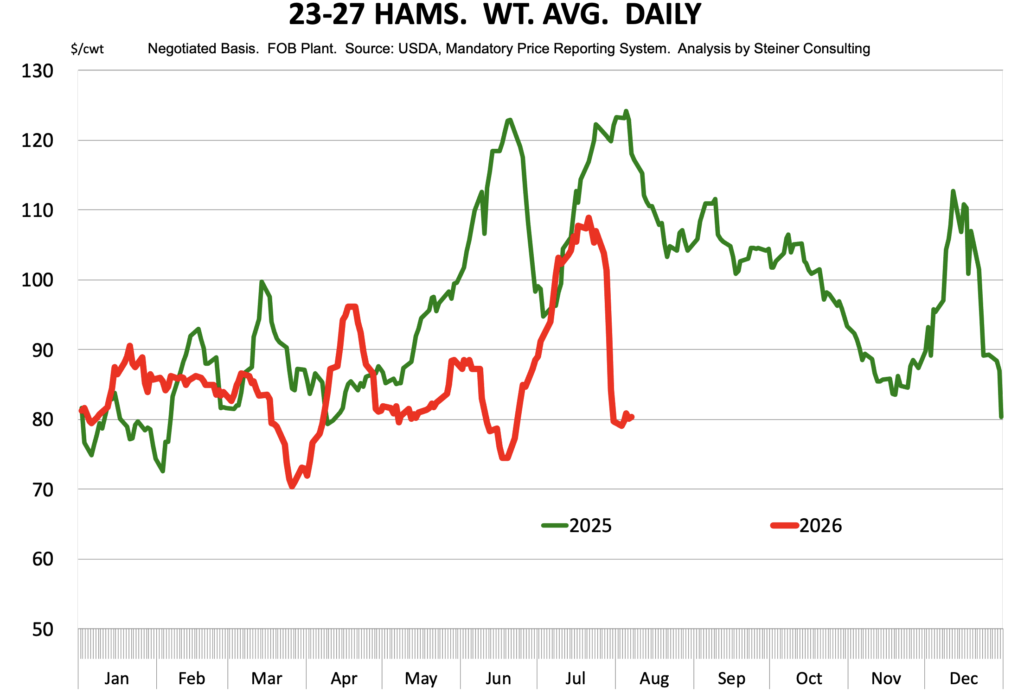
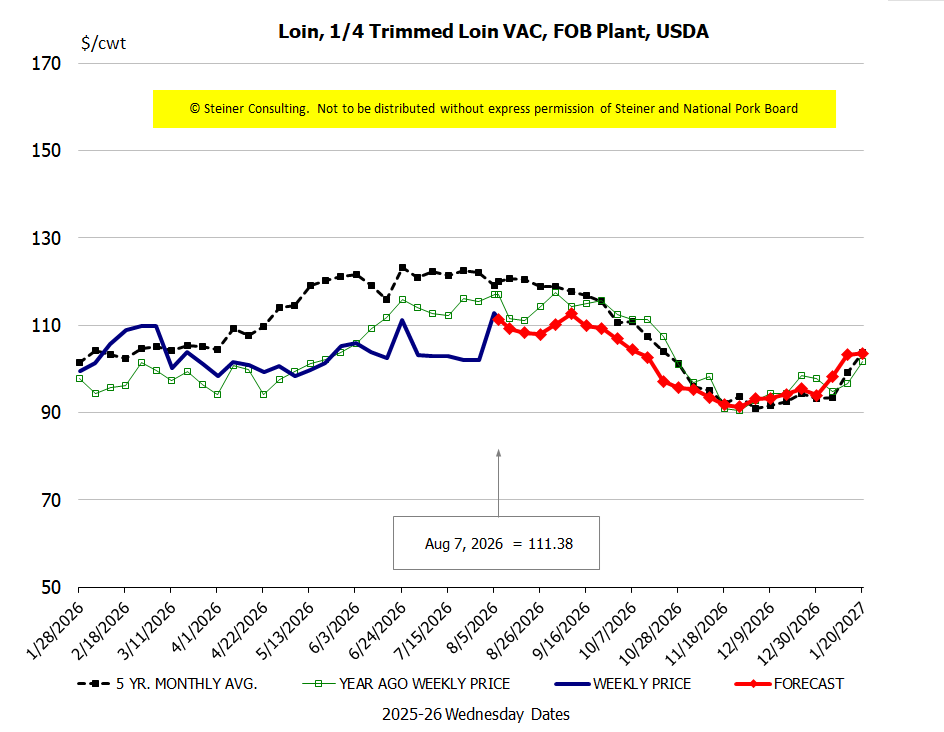
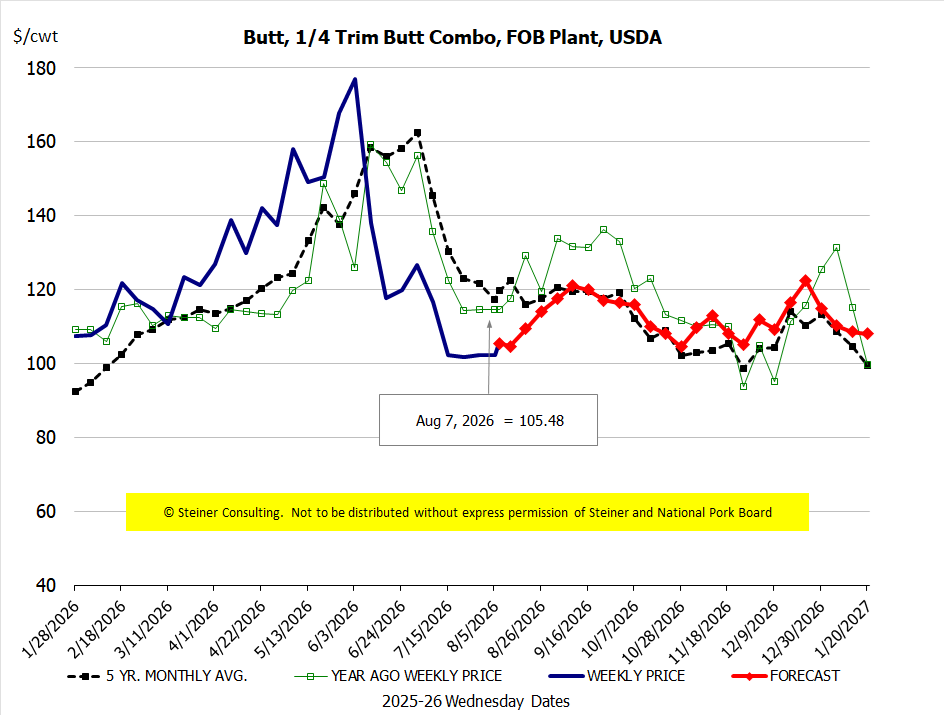
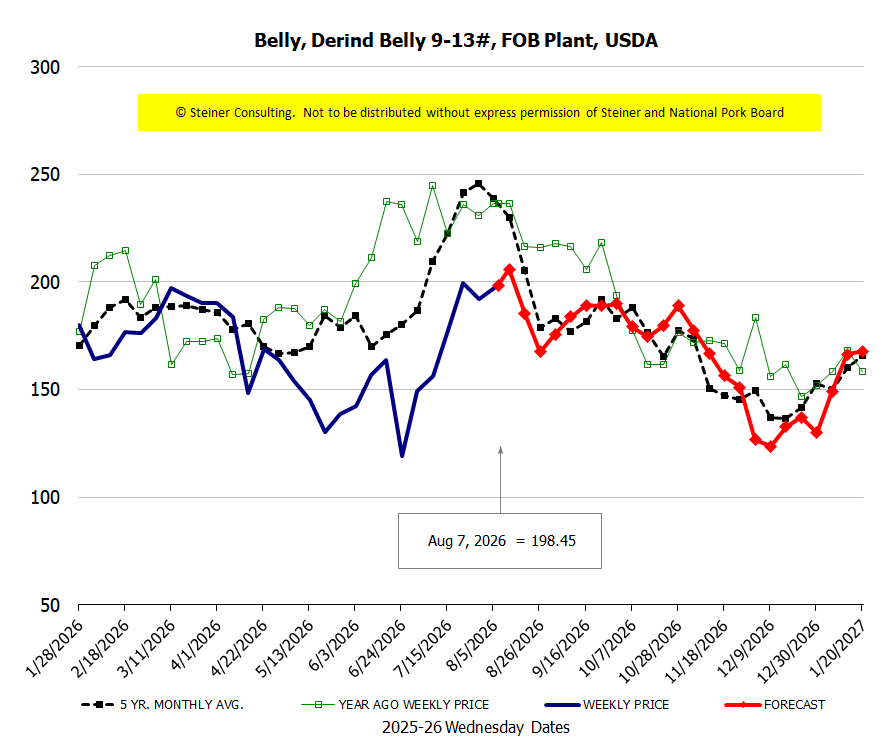
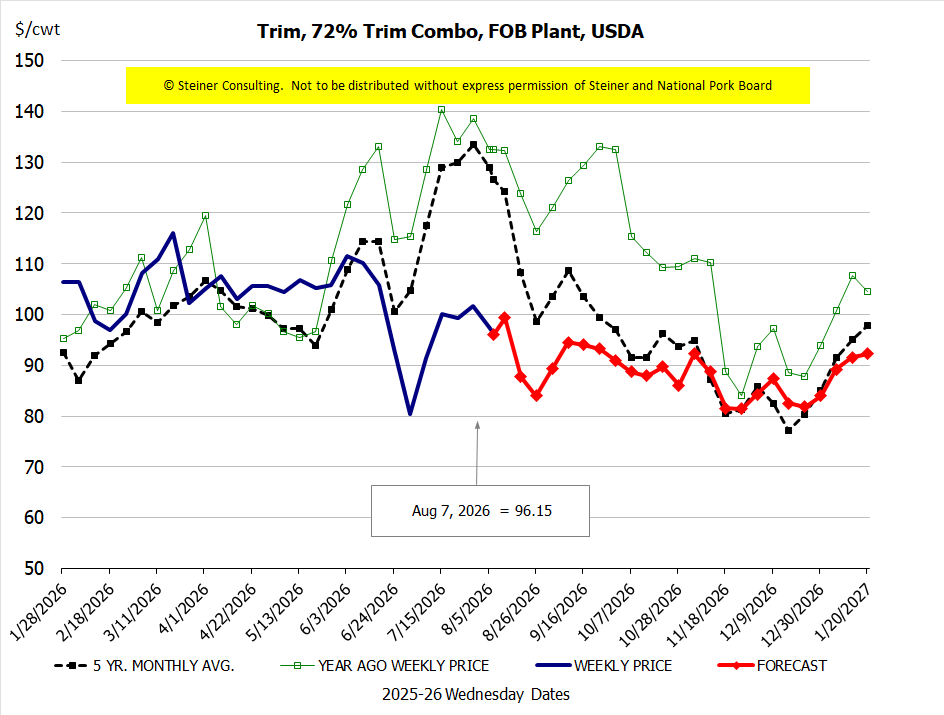
The rally in the pork cutout proved to be short lived. While all major primal values are down vs. last year, by far the biggest (negative) impact recently has come from the decline in ham values. Last week the average ham primal value was $82/cwt, down 30% from a year ago. That decline accounted for over half of the overall y/y drop in the value of the cutout. Other primals have underperformed as well relative to a year ago, despite the decline in supply. Loins were down 7%, bellies down 14% and picnics down 26%.
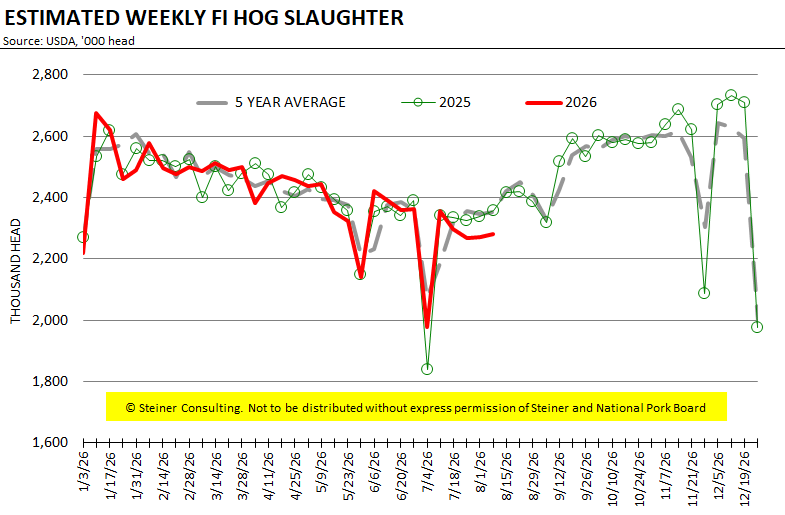
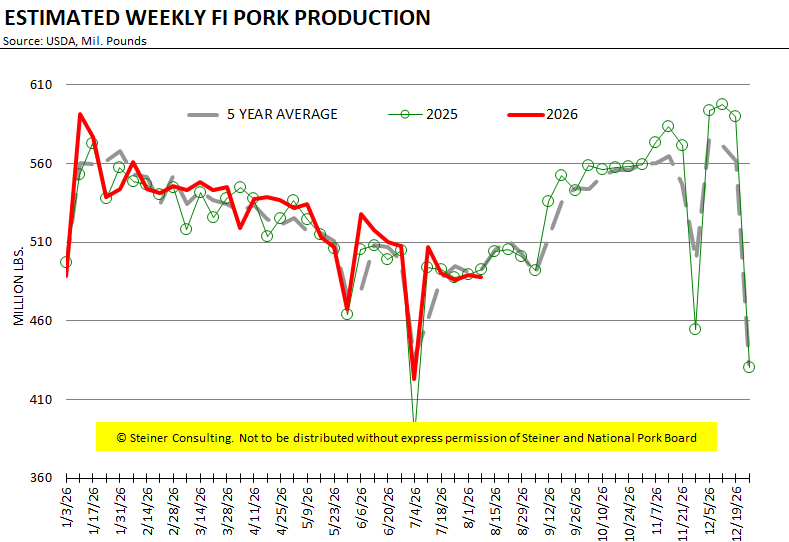
Little has changed in terms of pork supply compared to a year ago. Hog slaughter in the last four weeks has averaged 2.28 million head/week, 2.5% lower than a year ago and 5.4% lower than in 2024. Some of the reduction in slaughter has been offset by the increase in the weight of hogs coming to market. During these four weeks, the average dressed weight has been about 3 pounds (+1.3%) higher than a year ago and 2 pounds (+0.9%) higher than in 2024. And yet, the pork cutout last week averaged around $101/cwt, down around $3/cwt from a couple of weeks ago and $16/cwt (-14%) lower than last year.
Given that ham prices are down 30% vs. a year ago even as the supply is running under last year, this is clearly a demand problem. We think that primarily this is due to a slowdown in export demand, especially Mexico, and slower sales in domestic channels, mostly deli sandwich shops.
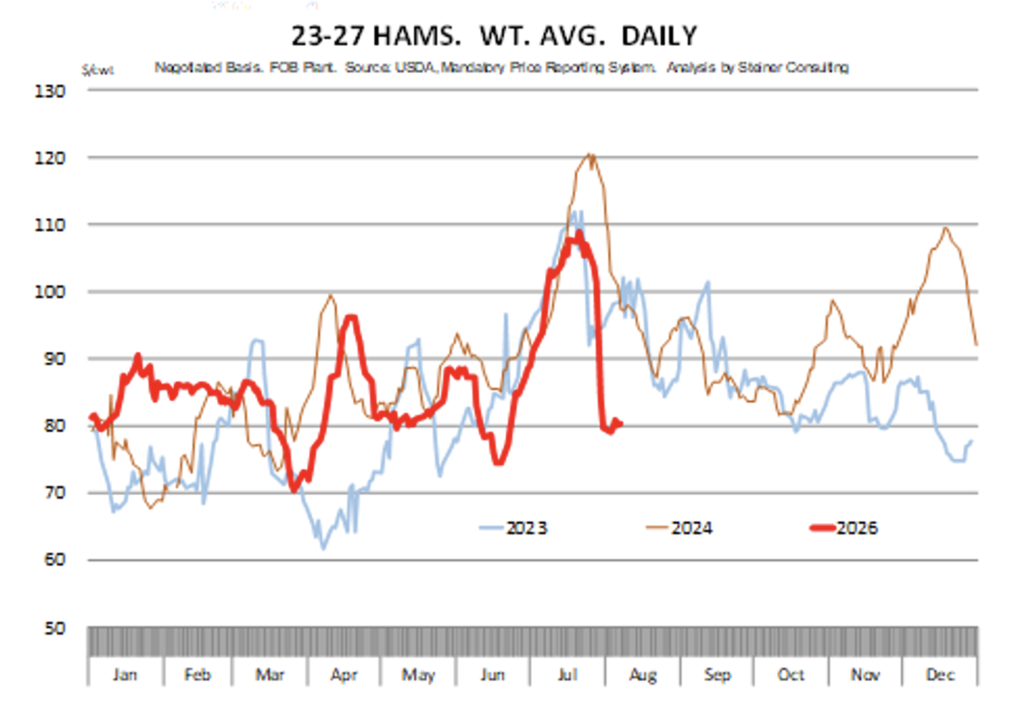
It is interesting to observe how current ham prices appear relative to last year vs. prices in 2023 and 2024. Ham prices through April traded relatively close to prices a year ago. However, last year we saw a big surge in the price of hams, first in May and then again in July/early August. That did not repeat this year. Why the difference? Last year tariff fears may have caused buyers for the Mexican market to buy more aggressively something that was not replicated this year. Indeed, outstanding pork export sale to Mexico at the end of July were some 32% lower than a year ago. Sales to Mexico are down even as the Mexican peso has gained vs. the dollar, making US prices even cheaper.
In the last two weeks ham prices have declined significantly relative to 2023 and 2024 as well. This would suggest that other factors may be at play in the near term (e.g. operational disruptions, labor issues, etc). If the reason for the recent decline may be due to short term disruptions, then we would expect a modest bounce in hams into September even as slaughter is expected to incrementally increase. The upside, however, still appears limited, hence the market bearish outlook for the fall. Ham inventory in cold storage at the end of June was 29% higher than a year ago and 13% higher than the five year average. It was the highest end of June inventory since 2018. Limited orders from Mexico may have clearly played a role but it appears that sales in domestic channels are anemic at best, resulting in supply building in cold storage at a faster rate.
As for other pork products, demand has been lackluster, both at retail and other export channels. We see the lower prices for pork loins as emblematic of the broader weakness for pork at retail. While the sharp decline in picnic values correlates with the continued decline in the price of EU and Brazilian pork relative to US hog values. Currently Danish hog prices are as much as $31/cwt (-32%) lower than US prices while Spanish prices are down $12/cwt (-13%). Lower prices for picnics and other export products are needed to stay competitive.
Price Chart
Forecasts
Steiner Consulting Group produces the National Pork Board newsletter based on information we believe is accurate and reliable. However, neither NPB nor Steiner and Company warrants or guarantees the accuracy of or accepts any liability for the data, opinions or recommendations expressed.


